12 Tips for Choosing the Right Plumbing Service


When a plumbing crisis strikes, it’s easy to go into panic mode and call the first plumbing company you find, but this isn’t always the best course of action. Hiring a plumber is often a costly ordeal on its own, so the last thing you want to deal with is an unexpected issue in the future due to a poor repair job.
sgsgsgs

This is why it’s important to choose the right plumber. Not only will you benefit from a faster and more affordable job, but also one that will prevent further plumbing issues from happening a few months down the line. Another concern is the wellbeing and security of your family, which is something you can’t put a price on.

So, the next time your dog is swimming in the bathroom or your sink is spurting like a spring, here are 12 tips that’ll help you choose the right plumbing service.

Experience

Naturally, a plumbing company that has been around for a few years will be able to provide a much higher quality service than one that was only recently established. While it’s true that every company has to start somewhere, a more established plumber has already learned from the mistakes that an inexperienced plumber might make on your home.

Plumbing License

Confirm that the plumber you choose has valid licenses. This is required by all local authorities and states, so no plumbing service worth your money should be without one. If they don’t have a license, chances are there’s a good reason for it and you should look elsewhere.

Insurance

In a similar light, a good plumber is wise enough to take the necessary precautions in their work and insure themselves for general liability. This can also include workman’s compensation insurance, which protects the workers handling your plumbing. A good plumbing service will be able to provide evidence of their insurance or bonding upon request.

Website

These days, a website serves as the most common point of contact between a business and its potential customers. Therefore, a good plumbing service will have a well-designed website that adequately details their services. Their website should include information about their hours, areas of service, and contact details.

Additionally, a good plumbing service might be one that goes the extra mile and offers additional content on their website. This can include a blog where they provide advice on plumbing issues or a live support center that you can contact in emergencies. These elements serve as indicators of how much a company cares for its customers.

Warranties

Reputable plumbing companies trust their workers to provide good service and their suppliers to provide high-quality products and tools. Therefore, a good plumbing company should have a warranty on the labor and products they offer. Be sure to also check whether they have a satisfaction guarantee with respect to customer service.

Customer Treatment

The way a company handles their calls and inquiries is telling of their workplace culture and how they treat their customers. A good plumbing company will answer your call in a warm, friendly manner and provide a helpful service throughout the conversation. Their behavior will extend to when they visit your home, so be sure to keep it in mind.

Transparency

Nobody likes a company that sneaks in additional fees and charges that you weren’t informed about. A reliable plumber will be transparent about exactly how much you’ll pay for their services. Avoid working with a company that isn’t willing to provide an upfront quote for fixing your plumbing problems.

Online Reviews

In this day and age, any company that is proud of its services will have a position on review websites such as Yelp and Google My Business. They should also have social media accounts where they interact with customers and follow up on reviews. A plumbing service with a load of unhappy customers and one-star reviews should probably be avoided.

References

In addition to online reviews, a good plumbing company should be able to provide a list of references. You can follow up on these references to firstly, see if they’re legitimate and secondly, to get an idea of what it’s like to work with the plumbing service in question. If they refuse to provide any references at all, look elsewhere.

Location

While not necessarily telling of the quality of their service, it would be easier to deal with a company that is located in your local area. This way, you can visit their office and get an idea of how they operate. It also makes it easier to receive a fast response in the event of a plumbing emergency in the future.

Credentials

There are three main types of credentials that a plumber can have. This includes the following:

Apprentice: An apprentice is a plumber who works alongside journeymen or master plumbers to obtain the necessary knowledge and skills required to become a qualified plumber. They usually participate in classroom instruction and paid practical work.

Journeyman: After passing training, an apprentice graduates to a journeyman and earns a license from their local state. Most don’t have established companies but can handle the majority of plumbing work.

Master Plumber: If you find a master plumber, chances are they’re the best in your area. Master plumbers have associates degrees and have tons of experience.

Additional Services

Some companies offer additional services to their customers for added value. For instance, this company offers a Home Service Back Office, which allows plumbing and home service businesses to outsource their customer support operations. If you’re interested in starting your own plumbing or home service business, this will serve as a great addition to your company.

Look out for plumbers that offer additional services like these, as it shows that they’re willing to go the extra mile to stand out from their competitors.

Conclusion

By factoring in their experience, reputation, transparency, customer service and credentials, you’ll be able to find the right plumber for your needs and have a reliable company to call in emergencies. Taking the time to do your research will inevitably pay off in the future, making it a worthwhile endeavor.


The Average Cost of a Bathroom Remodeling Project

Homeowners who undertake remodeling projects are typically altering either their kitchens or their bathrooms. As one of the most frequently occupied rooms in the house, bathrooms see a lot of wear and tear in a short amount of time. Toilets begin to leak, tiles loosen around bathtubs and showers, and mold forms in the flooring grout. Even with cost-reducing quick fixes over the years, these issues pile up until nothing will resolve them except a complete bathroom makeover.

iStock_000007365049_ExtraSmall
The difficulty with bathroom remodeling projects is that the room is one of the most complex and compact spaces in the entire house. With all that water in one small room, there are many opportunities to make costly choices and mistakes. The best way to keep the costs of a bathroom remodeling project in check is to start the process with a set budget and to make design choices based on needs that fit within those specifications.

How much does a bathroom remodel cost?
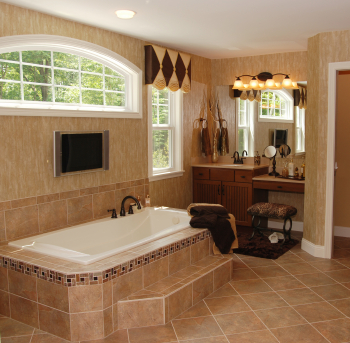
The average cost for a bathroom remodel varies greatly depending on the type of bathroom. Master bathrooms are generally more expensive, averaging approximately $16,000 nationwide, while non-master full bathrooms average closer to $11,000. This difference in cost is based largely on the upgrades added in a master bathroom.

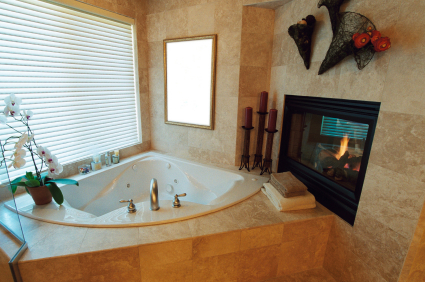
Because a master bathroom is still considered a luxury, building or remodeling these spaces is generally more costly. Homeowners working on their master suites are more apt to include more expensive accessories that are frequently nonessential. For example, master bathrooms often feature larger-than-normal soaker tubs or separate spaces for bathtubs and showers. These features are not essential to the functionality of the bathroom space, but they are luxuries that many homeowners wish to include in their master suites. These types of add-ons will greatly increase the cost of a bathroom remodeling project.

iStock_000001183268_ExtraSmall

Another variant in determining the average cost of a bathroom remodel is the location of the home. Homeowners across the nation spend varying amounts of money on very similar remodeling projects. Pacific coast homeowners tend to spend the greatest amount of money, averaging nearly $1,000 more per project than anyone else in the country. Residents of the Mid-Atlantic and New England states spend the second most on their remodels, while the South Atlantic states are third on the list. The least expensive remodeling projects seem to be located in the Mountain region where the average remodeling project is nearly $6,000 less than those on the Pacific coast.

Despite with these regional disparities in remodeling costs, even greater differences exist between urban and rural projects. Homeowners in major cities, such as New York and San Francisco, frequently spend more than $20,000 on non-master full bathroom remodels. Similar projects in smaller metropolitan areas, such as Oklahoma City and Dallas, average closer to $7,000. These regional and location differences are based on the availability of materials and more importantly on the cost of labor.

What factors most influence the cost of a bathroom remodel?
The largest single cost in a bathroom remodeling project is labor for the contractor and crew that will be handling the project. The cost of labor usually amounts to around one-third of the entire budget of the remodel. This fee is nearly non-negotiable unless the homeowner does some of the work himself to cut costs. Therefore, if the budget of the remodeling project needs to be trimmed, the savings most likely will need to come from some of the luxuries and not from the labor budget.

Another costly factor in bathroom remodeling projects is the plumbing itself. If the bathroom project is mainly cosmetic, this may not be a large factor in the remodeling, but many bathrooms are altered because of leaking faucets or bathtubs. Correcting leaks and replacing bad pipes can be very time-consuming for the construction crew and plumber which will drive up the labor costs in addition to the fees for the new pipes. This can be especially true if the leaking pipe is difficult to find or if the house is older and features non-compliant types of pipes. These hidden costs can become budget-busting very quickly.

Beyond the cost of labor and plumbing, the other major expenses in a bathroom remodeling project mainly involve cosmetic choices. While it is necessary to place a floor, walls, and ceiling in the bathroom, the types of materials and their costs can vary widely to fit within any remodeling budget. For example, although radiant (heated) flooring that will keep feet warm on cold mornings is exceptionally comfortable and luxurious, it is not a necessary feature for a bathroom remodeling project. Therefore, radiant flooring is an added expense that will drive up the cost of the project rather than keep it within budget.

What are some common luxury features used in bathroom remodeling projects?
In addition to radiant flooring, there are several common luxury features that can take any bathroom remodeling project to another luxurious level. Many interior bathrooms that do not have windows are being given natural light through the addition of skylights. These features can flood a room with natural light during the day while also giving a romantic view of the moon and stars during the night.

Deep soaking bathtubs and rain-inspired shower heads are luxurious additions to many master bathroom remodeling projects. These powerful yet calming additions to cleanliness help to create an at-home spa atmosphere for any bathroom. In addition, many tubs and showers are surrounded by elaborately designed bathroom tile designs with stain-resistant grout that withstand the threat of mold while looking stylish and modern.

iStock_000017754415_ExtraSmall

No matter the budget of a bathroom remodeling project, there are many options and variables to help keep the costs reasonable while creating a functional and attractive space. We hope you enjoyed this post on the average cost of bathroom remodeling projects!

DIY – How to Install a Pedestal Sink in Your Bathroom

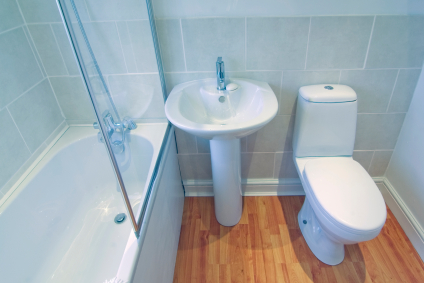
If you are thinking of making some improvements in your bathroom, installing a pedestal sink may just be the right thing to do. Installing a pedestal sink may be considered a tough task. However, this can be performed without any need for a professional installer. Pedestal sinks are suspended on the wall through a wall bracket or directly secured to the wall and supported by the pedestal.

iStock_000003204725_ExtraSmall

For the DIY folks out there, here are the steps on how you can install your own pedestal sink:

Installing the Sink

1. Before you begin, you have to prepare the necessary materials that you will need such as a measuring tape, hacksaw, electric drill, and an adjustable wrench. Other items needed include a pedestal sink that comes with a ratchet with sockets, slip nut fittings, a tailpiece, P-trap, a mounting bracket, wood screws, and a 2×10 scrap plywood.

2. The first step would involve mounting the sink on the wall. Before that though, make sure that the wall where you are going to install the sink is repaired and reinforced. There are some types of sink that will require a bracket to be installed first. However, there are types of sink that are to be mounted directly to the wall without using a bracket.

3. For sinks with brackets, it is important to place the bracket on the wall first. Then, use the bracket as the outline to mark the location where you will be mounting lag bolts. You have to find the correct location of the bracket. If you are unsure, you can check the manual provided by the manufacturer. In addition to this, make sure that the bracket is level.

4. After marking the walls, you can now start in drilling pilot holes on the layout marks. Just make sure that the holes are 1/8 inch smaller compared to the lag bolts supplied by the manufacturer. Lag bolts are type of large screws that come with a square or perhaps a hex head. After doing this, you can install the bracket together with the lag bolts.

5. Once the bracket is in place, you may now hang the sink on the wall bracket. Then, install the additional screws provided by the manufacturer to hold the sink in place on the bracket and the wall. However, if the sink does not have any mounting bracket, you may install the sink directly to the wall using fasteners which are provided by the manufacturer.

6. After doing this, test fit the pedestal and mark its location. Then, move it safely away from the area. This will be installed last.

Installing the P-Trap

Now that your sink is securely attached to the wall, the next thing that is needed to be done would be to install the P-trap. The P-trap attaches the sink to the drain. The U-shaped portion of this pipe serves as the trap which functions to retain enough water that prevents sewer gases from entering the pipe. The P-trap may be adjusted. This can also slide up as well as down on the pipe which leaves the sink drain. Moreover, the P-trap’s other end can slip in and out of the drain fitting on the wall.

1. Installing the P-trap will involve cutting a tailpiece which sticks out from the assembly when the trap would not align with the drain on the wall. First, you have to slide the short portion of the P-trap into the tailpiece which drops down from the drain of the sink. Then, move the P-trap up and down to bring into line the trap arm with the wall opening.

2. Utilize a hacksaw to cut and make the tailpiece shorter in size when the P-trap cannot be positioned higher up the tailpiece and when the trap arm is located below the wall drain fitting. You may need to purchase a longer tailpiece if the P-trap is positioned above the drain fitting and attached to the end part of the tailpiece.

3. Take the lower portion of the P-trap apart and then put in the trap arm into the drain fitting on the wall as far as it can go. After this, pull the trap arm out of the fitting on the wall and align this with the top portion of the U-shaped end of the trap. However, if the trap arm would come out completely from the wall before you can even attached it to the trap then you will need to purchase a much longer trap arm. On the other hand, if the trap arm is already inside the wall drain and this extends beyond the U-shaped portion of the trap, then you will need to cut it shorter using the hacksaw.

4. Insert the arm back into the drain on the wall, and align it with the trap and thread on the slip nut. However, you should not tighten it yet. When the trap parts are already joined together, you may now tighten the slip nuts located on the wall drain fittings as well as on the tail piece.

Attaching the Riser Tubes to the Faucet

After successfully installing the P-trap, the next thing to do would be to install the riser tubes on the tailpiece of the faucet. You can make use of the compression nuts that are included with the faucet. The riser tubes attach the stop valves and the faucet. You have to snug up the nuts using your hand. In addition to this, loop or bend the riser tubes so they will easily fit between the valves and the wall fitting before tightening them using a wrench.

Finishing It Up With the Pedestal

After everything is set up, make sure to test for leaks. When everything is fine, you may now install the pedestal. You simply need to position the pedestal properly under the sink following the outline made earlier. Secure the pedestal using a wood screw on the floor. Make sure that you do not over tighten it as this may crack the base of the pedestal.

DIY – How to Fix a Leaking Faucet

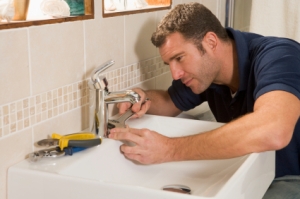
In addition to being aggravating in general, leaking faucets make water bills go through the roof. With that in mind, it’s smart to take care of the problem right away. There are many places where a faucet can leak, and a leak at the handle can be especially perplexing. Despite turning the handle as far as possible, a small, steady trickle of water may drip out into the sink. When the faucet is on, the leak may turn into a small stream that gets onto counters and causes a mess. The good news is that repairing a faucet that’s leaking at its handle is fairly simple. Just follow the directions below.

What You’ll Need
Until you take apart the handle, you won’t be able to tell what is specifically causing the leak. Fortunately, it’s probably just one of two possible things: A damaged handle cartridge or a corroded, cracked O-ring. Neither part is especially expensive, so you might as well replace them both while you’re at it. The local big-box home improvement store is sure to have both pieces, and you can probably find them at smaller hardware stores as well.

In addition to buying O-rings and a handle cartridge, you will need the following tools:

  • Wire brush
  • Mini screwdriver
  • Allen wrench set
  • Flathead screwdriver
  • Sharp knife
  • Wrench
  • Non-toxic, heatproof plumber’s grease
  • Calcium solvent


istock_000008887319_extrasmall

1) Turn Off the Water
Any time you work on a sink, the first step is to turn off the water. The last thing you need is to be sprayed in the face after pulling off the handle.

  1. Look beneath the sink. There should be two valves located at the back or side of the cabinet.
  2. Turn each valve all the way to the left. You may have to use a wrench. Don’t use excessive force because it could damage the valve and force you to run out and buy a new one.
  3. Close or cover the drain to keep screws and other hardware from dropping in and getting lost.

2) Remove the Handle
The only way to repair a leaking faucet handle is by removing it. Follow these steps to do so.

  1. Take a minute to examine the handle and faucet. The specific steps that you’ll need to take will depend on how it is designed.
  2. If you have an older faucet, you should be able to simply twist off the handle or handles. Turn the handle as you would when turning it on. When it reaches what seems to be the farthest point, apply a little extra pressure and keep turning. It should push past that point. From there, keep turning it until it twists off completely.
  3. To remove the handle on a newer faucet, look for the brand logo near its base. You should be able to pry it off with a flathead screwdriver. Once it’s removed, you will see a tiny hole. Insert the Allen wrench or mini screwdriver into the hole and twist it to the left. At this point, you should be able to remove the handle.

3) Fix the Handle
Now that you’ve removed the handle, you can really get down to business. Keep in mind that the following steps are simply a guide. The assembly of your faucet and handle may differ slightly. You might want to snap photos as you work so that you can put it all together again easily.

  1. If you have a newer faucet, you will see a shroud. Twist it to the left to remove it.
  2. You should now see a small adapter that’s secured by a screw. Using a wrench to hold the assembly in place, remove the screw. The adapter should pull off with ease.
  3. Remove the small plastic cover that you’ll see after removing the adapter.
  4. There will be another, larger plastic cover. To remove it, twist it to the left with a wrench.
  5. To remove the small clip, just pry it off with a flathead screwdriver.
  6. Using the wrench, pull up on the stem of the faucet. This will allow you to access the spacer, which you should remove. At this point, you should be able to pull the stem off all the way.
  7. Use a wire brush and calcium solvent to remove any buildup. If it’s not removed, it could keep causing problems in the future.
  8. Remove the O-ring or O-rings and replace them with the new ones.
  9. Put in the new handle cartridge.

4) Rebuild the Faucet Handle
To rebuild the faucet handle, just follow the same steps you did before but do them in reverse. This is where the photos you took earlier will come in handy. Take your time while rebuilding the handle. Securely fasten all of the hardware and wipe everything down to ensure that it is dry and free of debris.

5) Test the Faucet
After everything is in place, turn the water back on by turning the valves beneath the sink. Look closely for signs of a leak. Turn the handle or handles and check to see if water leaks from them when the water is on. If not, you are good to go.